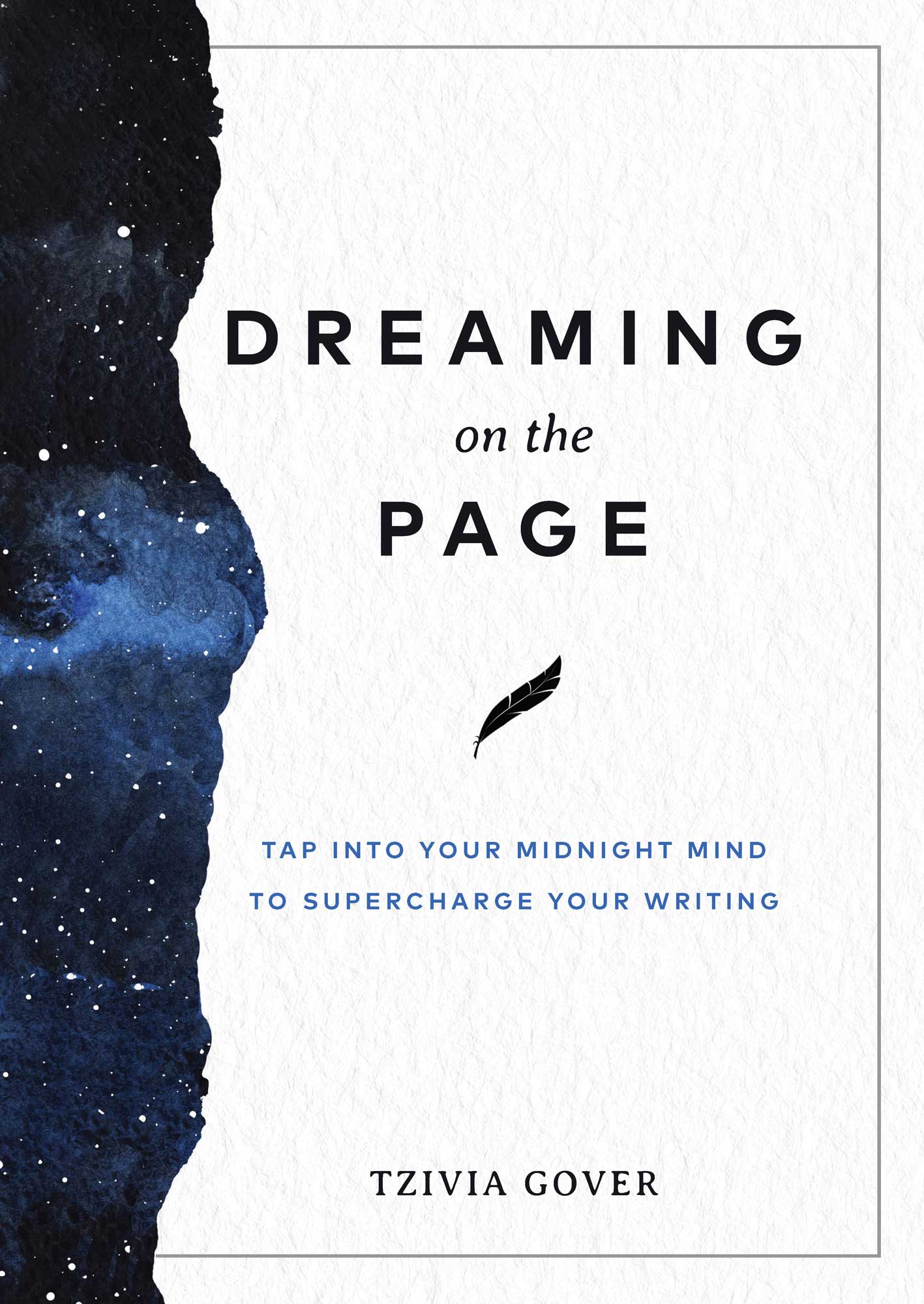
When I wrote Dreaming on the Page, I wanted it to be chock full of resources for you, dear reader. And so, even after the book went to press, there was more I wanted to share with you you. So, here you will find: bonus PDFs, notes, links, and more to supplement what you’ve already discovered in Dreaming on the Page: Tap into your Midnight Mind to Supercharge Your Writing.
Dreaming on the Page Downloadable PDFs
- 25 Books on Dreams and Writing to Inspire You: Enjoy this list of books that have informed my thinking about dreams, writing, and the places where they intersect.
- Group Guidelines: Download and print these Group Guidelines to help you start a Dreaming on the Page Circle of your own.
- Dreaming on the Page Postcard Prompt: Enjoy this downloadable postcard with a writing prompt that you can use with any dream, anytime. Keep it for yourself, or share it with a friend.
A note on the prompt: How to Be a Dreamy Poet
The prompt on page 181 was inspired by the poem “How to be a Poet” by Wendell Berry.
A note on the ‘The Healer at the Edge of the Village’
“The Healer at the Edge of the Village” found in Section 3, page 220, of Dreaming on the Page is based on a story that had been recorded by Carl G. Jung in “Mysterium Coniunctionis,” vol. 14 of The Collected Works of C.J. Jung, Princeton University Press, 1982. Par. 604, n. 211. In a footnote, Jung explains that the story of the “rain-maker of Kiao-chau” was told to him by Richard Wilhelm, who witnessed the incident firsthand.
I chose to adapt and generalize the story for my purposes in this book. I went back and forth about how to present it, and how to credit it. In the end, I decided that since I’d generalized it so liberally and because I feared the attribution and explanation would weigh down the text, I made a last-minute decision to leave off the explanation of the story behind the story.
However, I encourage readers to seek out Jung’s writings about the original story in The Collected Works as cited above, and other sources. In doing so myself, I was rewarded with a deeper understanding of the rainmaker story.
A note on the use of pronouns in the book
At 10 years old, I saw a sign in my favorite stationery store that read: “Boy Wanted.” I was indignant. Why a boy? What job could there be that a girl couldn’t do as well? This was circa 1973. I marched inside to find the proprietor, a man who knew me from the countless times I’d come to the store with my mother to purchase greeting cards, candy, and comic books. I confronted the owner with my question. I can still remember him looking down at me through his wire-rimmed glasses. He nodded quietly, walked to the door where the sign hung and took it down. the next time I visited he’d replaced it with a new sign that read simply, “Help Wanted.”
My passion for equality between the sexes has only grown in the decades since. When my daughter was growing up, she learned that we referred to an animal or bird, or a driver on the highway speeding past, whose sex we couldn’t immediately identify as she: “When it doubt, assume the feminine,” I’d say. When she asked why I’d reply: “To make up for centuries of patriarchy when the masculine pronoun was the default.”
So, in my books, I primarily use the feminine pronoun. Sometimes I also use “they” as a singular pronoun, as it encompasses all genders.
I could say more. In fact, I wrote an entire paper on this topic in a college linguistics course. But I’ll leave it here for now.
Happy reading!
Tzivia
Dreaming on the Page: Tap into Your Midnight Mind to Supercharge Your Writing
Our dreams are an ever-present, yet largely ignored, source of inspiration and creativity. Dreaming on the Page offers writers a novel method for tapping into the unique neurochemistry of the dreaming mind to enliven their writing and find more meaning on the page — and off. Discover insightful prompts, journaling tips, and dreamwork exercises based on the science, psychology, and spirituality of dreamwork.